
Maximize your revenue: Using dynamic pricing in golf simulator software
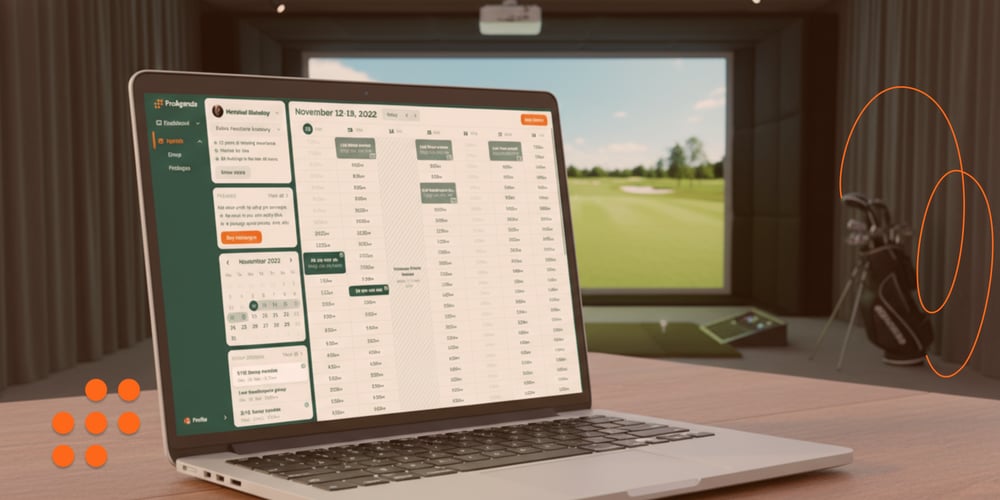
If you are charging the same hourly rate for all your time slots, there is a possibility that you’re leaving money on the table. Every hour that stays unused is costing you revenue. The most successful indoor facilities move beyond static pricing. By leveraging dynamic pricing features within your booking software, you can shift from a ‘one-size-fits-all’ model to a revenue engine. Whether it’s filling quiet morning hours or enhancing the value of your busiest hours, dynamic pricing ensures your business stays in the green. Let’s explore how to flip the switch on your revenue.
Understanding the 'perishable inventory' logic
To understand the idea behind dynamic prices, you must understand that your bay and simulator hours expire. If your bay is not booked, the revenue gets lost. Understanding this fact helps you realize that offering a lower price during quiet/empty hours does not cost you money; it helps you generate revenue in hours that would otherwise not be booked at the higher price. Your clients see a discount, you get revenue in hours that would stay empty, so you get additional revenue.
Capturing the most value during peak hours
You are probably familiar with the supply-demand system. The same applies to your golf simulator hours. Often, on nights or weekends, demand exceeds supply. More people are free to book a simulator outside work hours than during work hours and in the mornings. This can be reflected in your price strategy. A popular time can cost more than a quiet time. This way, you can make more profit in the more popular time whilst motivating clients to book an off-peak time.
Data-driven decisions through the golf simulator software
Modernbooking software provides a reporting tool to help you make business decisions. You might have a good feeling about your busiest hours, but it is important to have data to back you up. This way, you can see popularity trends and make price decisions based on what you see in the reports. You should not be changing prices manually. This could result in slight errors, making you miss out on revenue.
Manage customer perception
When working with on and off-peak pricing, you should be smart in presenting the price difference. Promote the off-peak hours as discounted hours rather than making your peak hours feel more expensive due to popularity. You don’t want your clients to feel punished for booking your peak hours. You do, however, want clients who book off-peak hours to feel like they have a great deal. This is why it isimportant to have clear communication with automated pricing rules so customersknow what to expect whenever they want to book simulator time.
The days of‘one price fits all’ are over. Most golf simulator facilities benefit from dynamic pricing and smarter sales communication. Your pricing can be a great tool to fill your off-peak hours and get the most out of your simulators. Time is your most valuable asset that needs to be managed well. By implementing dynamic pricing, you stop guessing and start actively growing your academy by transforming your quiet hours. But most importantly, you cater to all types of golfers by offering options for midday golfers. Don’t let your simulators get waisted, while youcould be optimizing every hour!

Managing Director & Product Expert at ProAgenda. Jordy has worked in the golf industry for more than fifteen years. As product owner, he developed ProAgenda from a standalone scheduling tool into a complete booking and management platform for golf businesses. He shaped the product through conversations with countless golf academies and industry partners such as Lightspeed and Foregroup.

Want to explore more features
Got curious about the features of ProAgenda and want to read some more? Download our feature flyer and explore all the extensive features ProAgenda has to offer!
Frequently
Asked
Questions
Dynamic pricing is an automated revenue management strategy that automatically adjusts simulator bay rental rates based on demand, time of day, day of the week, or weather conditions to maximize total facility revenue and bay utilization.
It boosts revenue by lowering bay rates during low-demand off-peak hours (e.g., sunny weekday mornings) to attract cost-conscious golfers, while raising rates during high-demand peak hours (e.g., rainy weekends and evenings) to capture maximum willingness-to-pay.
Yes, modern golf scheduling software allows operators to pre-set rule-based pricing schedules. The system automatically updates hourly rates on the online booking portal according to time blocks, seasonal changes, or live demand triggers without staff intervention.
It gives customers greater choice and transparency. Price-sensitive players gain access to budget-friendly off-peak time slots, while players seeking prime evening or weekend hours can guarantee bay availability by paying standard or premium rates upfront.
Yes, software systems allow facilities to protect member perks by offering fixed discounts or free off-peak bay hours within subscriptions, while applying dynamic pricing rules strictly to non-members or public pay-and-play bookings.
Managers should analyze historical bay occupancy trends, peak vs. off-peak utilization rates, average booking lead times, customer cancellation rates, and local weather patterns to continuously optimize pricing tiers and revenue yield.
Get 30-day free access to our platform.
Start your free trial, set up your account, and be ready for business. No strings attached.