
5 Ways Indoor Golf Studio Owners Can Maximize Bay Revenue During Off-Peak Hours
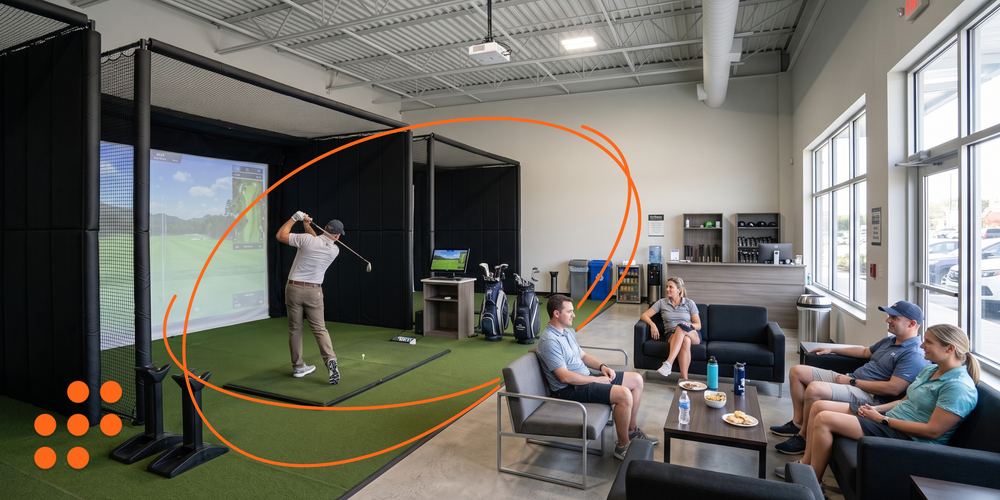
Every indoor golf studio owner knows the feeling: Friday evening is booked solid, Saturday morning has a waitlist, but Tuesday at 11:00 AM? Crickets. Fixed overhead costs, like rent, software subscriptions, insurance, and equipment leases, don’t pause when your bays sit empty. Prime evening and weekend slots can only drive so much revenue; true profitability hinges on turning unused off-peak capacity into consistent cash flow. Maximizing off-peak bay utilization isn’t about cutting prices to the bone and diluting your brand. It’s about target audience alignment, creative programming, and strategic incentives. In this post, we explore five actionable ways to fill your simulators during downtime and turn quiet hours into a steady driver of recurring revenue.
Launch off-peak "work & play" memberships
Target remote workers, freelancers, retirees, and shift workers with a dedicated off-peak membership. This will provide predictable, recurring subscription revenue from demographics with flexible daytime schedules, without crowding out high-paying weekend or evening guests. Position your studio as a remote-work hub by offering high-speed Wi-Fi, comfortable seating, and free coffee/beverage perks alongside simulator access.
Host targeted daytime leagues
Pitch your space to corporate offices, local businesses, and HR teams as an innovative employee benefit, team-building activity, or lunchtime break activity. B2B partnerships secure group bookings during standard business hours when general foot traffic is lowest. Offer 45-minute “lunch & launch” express sessions or structured corporate hours during midday.
Introduce dynamic pricing and tiered time slots
Implement dynamic pricing that differs between on- and off-peak hours to promote low-demand time slots. Price-sensitive golfers, high handicap players, and practice-focused players will intentionally shift their visits to off-peak hours to save money. Clearly highlight differences on your online booking system to naturally steer price-conscious users toward quiet hours.
Produce off-peak hours for professional golf instruction
Partner with local PGA teaching pros or offer in-house coaching packages strictly redeemable during off-peak windows. Instructors prefer quiet, low-distraction environments for video analysis and launch monitor diagnostics. Students get lower bay rates combined with lesson fees, creating a win-win value package. Offer ‘data-driven’ practice hours bundled with lessons so students can complete homework drills on your simulator between teaching sessions.
Empty bay time doesn’t have to be a sunk cost. By segmenting your audience and implementing structured daytime memberships, corporate packages, targeted leagues, dynamic pricing, and instruction bundles, you turn quiet hours into profit centers.
Which off-peak strategy will you implement first? Audit your booking software today to pinpoint your lowest-occupancy hours, pick one tactic from this list, and launch a test campaign this week.

Managing Director & Product Expert at ProAgenda. Jordy has worked in the golf industry for more than fifteen years. As product owner, he developed ProAgenda from a standalone scheduling tool into a complete booking and management platform for golf businesses. He shaped the product through conversations with countless golf academies and industry partners such as Lightspeed and Foregroup.

Want to explore combined resource and lesson booking?
ProAgenda offers an extensive resource-booking tool that automatically blocks resources, simulators, and bays when lessons are booked, keeping your indoor studio running at optimal efficiency!
Frequently
Asked
Questions
Look at your booking software's occupancy reports over the last 60 to 90 days. For most indoor golf studios, prime hours are weekdays after 5:00 PM and all day Saturday and Sunday. Off-peak hours typically fall between 8:00 AM and 3:00 PM on Monday through Thursday, with Friday afternoons varying by season. Identify your lowest-occupancy windows and focus your promotional efforts specifically on those time slots.
Not if you frame it correctly. Instead of framing lower prices as a "discount" or "cheap rate," market them as specialized value packages—such as Off-Peak Practice Passes, Corporate Daytime Rates, or Junior Academy Hours. Tiered pricing is standard across the hospitality, fitness, and entertainment industries. It signals smart inventory management rather than a decrease in value.
A common benchmark is setting off-peak rates 25% to 40% lower than prime evening/weekend rates. The goal is to set a price point low enough to shift price-sensitive practice golfers into quiet hours, while maintaining a healthy margin over your utility and wear-and-tear costs.
Most prime-time customers pay higher rates because their work schedules restrict them to evenings and weekends. However, to safeguard your peak revenue, restrict off-peak memberships and discounted packages strictly to non-peak hours (e.g., booking access ends at 3:00 PM). If an off-peak member wants to play at 7:00 PM on a Thursday, require them to pay the standard prime-time rate.
Focus your marketing on the lifestyle benefit rather than just golf. For corporate clients, market your studio as an upgraded meeting space for "Lunch & Launch" team meetings or client entertainment. For remote workers, highlight amenities like fast Wi-Fi, quiet work areas, and coffee stations to position your space as a high-end alternative to a standard coworking hub.
It depends on your operating costs versus projected volume. Test early morning hours (e.g., 7:00 AM–10:00 AM) with a pre-booked membership model or automated, keycard/app-based entry rather than staffing the front desk full-time. If you can cover staffing or utility overhead with just 1 or 2 occupied bays per hour, extending early hours adds direct net profit.
Get 30-day free access to our platform.
Start your free trial, set up your account, and be ready for business. No strings attached.